

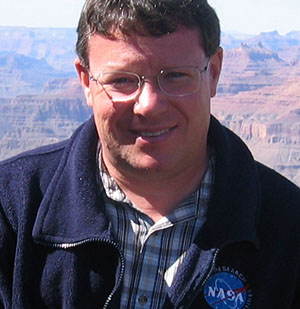
 Bio: Prof. Knuth (http://knuthlab.org/) is an Associate Professor in the Department of Physics at the University at Albany (SUNY) and is the Editor-in-Chief of the journal Entropy (MDPI). He is a former NASA computer scientist having worked for four years at NASA Ames Research Center in the Intelligent Systems Division designing artificial intelligence algorithms for data analysis in both astrophysics and Earth science. He has 25 years of experience in applying Bayesian and maximum entropy methods to the design of machine learning algorithms for data analysis applied to the physical sciences. His current research interests include the search for and characterization of extrasolar planets, quantum information, signal processing, and autonomous robotics. He has published over 100 peer-reviewed scientific papers and has been invited to give over 80 presentations in 14 countries. Prof. Knuth is the Vice President of Science and Technology for UAPx (http://uapexpedition.org/) and a member of the Scientific Coalition for UAP Studies (SCU, https://www.explorescu.org/) where he is working to scientifically study UAPs. He is one of the first scientists to publish a peer-reviewed scientific paper on the flight characteristics of UAPs.
Lecture: UAPs and UFOs: An Open-Minded Scientific Perspective
The body of Scientific Knowledge is littered with ideas and theories that were at first thought not only to be wrong but also to be ludicrous. These include the germ theory of disease, the theory of meteorites, the theory of blood circulation, the theory of evolution, the theory of continental drift, the theory of relativity, and the existence of black holes, just to name a few! For the last 70+ years, we have been told by authorities that UFOs are misidentifications and nonsense. And the few scientists who did try to properly study these phenomena were discredited, marginalized, and often ruined. While the great majority of sightings are likely to be either misidentifications or nonsense, it is now clear, especially after the revelations of the AATIP Program and US Naval encounters, that *some* UAP/UFO sightings are serious and warrant careful study. Here I will discuss UAPs and UFOs from the perspective of an open-minded scientist interested in resolving these issues. I will discuss the challenges faced in identifying the unidentified. In particular, I will discuss what is involved in demonstrating conclusively that some of these phenomena are physical objects and the greater difficulty of demonstrating their nature and origin. Keeping in mind that we are very probably not dealing with a single phenomenon, I will mention several hypotheses and identify which are most probable, and why, and how our understanding could change with better data. Last I will discuss what needs to be done to collect better data, and why eagerly waiting for disclosure is not tenable. The aim of this presentation is to inform the UFO cognoscente of the necessity of studying these phenomena scientifically, what is required to do so, and why it is so very challenging.